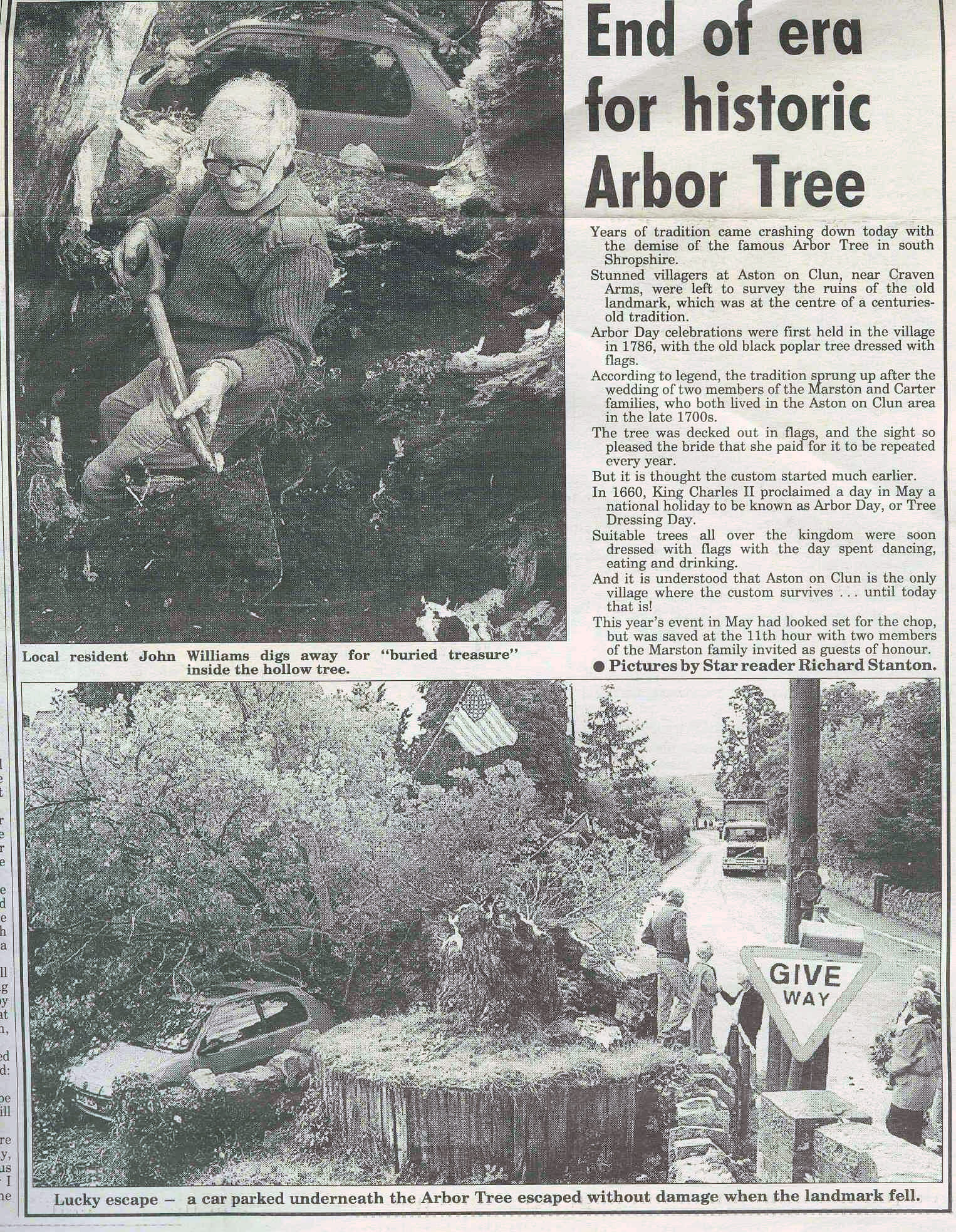
Every year on the last Sunday in May, the people of Aston-on-Clun decorate a special tree in the middle of their village.
Before 1995, the tree was an old black poplar believed to be more than 300 years old. After a storm knocked it down, villagers replaced it with a younger tree grown from one of its cuttings.
Each year, bright flags are hung on the tree and stay there until the next celebration.
Long ago, decorating trees and holding festivals like this may have been common across Britain. But during the time when Oliver Cromwell and the Puritans were in power, many celebrations, dancing, and games were banned because they were seen as unimportant or immoral.
When King Charles II returned to the throne in 1660, he created a holiday called Oak Apple Day to remember how he escaped after the Battle of Worcester by hiding in an oak tree.
Some historians think the tree festival in Aston-on-Clun may have started from these celebrations, although others believe it could be even older.
Some people have connected the ceremony to ancient fertility traditions, but most historians think it probably began during the time of the Stuart kings rather than in prehistoric times.
However, some local people believe the tradition goes back to the Iron Age and may have links to the Celtic goddess Brigit.
A more believable story comes from 1786, when the local landowner, John Marston, arrived in the village with his new wife, Mary Carter, just as the tree was being decorated. According to different versions of the story, the decorations were either planned for their arrival or Mary thought they had been made to welcome her. Either way, she loved the display and rewarded the villagers who created it.
Today, Aston-on-Clun’s Arbor Day includes a village fair, Morris dancing, folk music, and many traditional activities.
People travel from all over the country to see this unusual event.
Even now, the decorated tree remains the centre of the celebration and a symbol of the village’s history and community spirit.